-1920x1079.png&w=1920&q=75&dpl=dpl_DEQgEHbCeJeDnLqWXwmXjVxeXs1E)
Polyaspartic vs. Polyurea: What is the Real Difference?
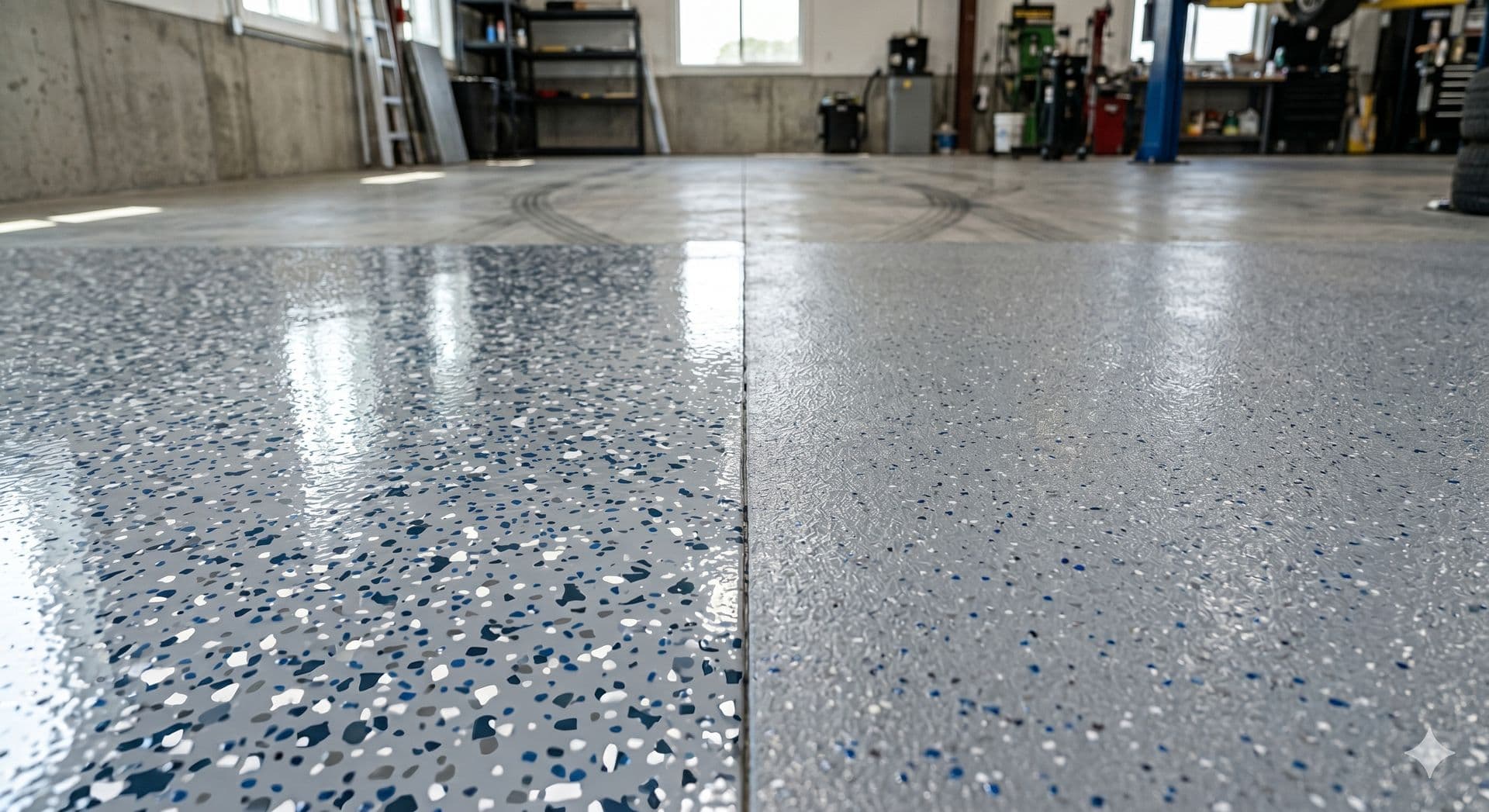
Many property owners look for durable floor coatings to replace peeling epoxy. In that search, two names constantly pop up: polyurea and polyaspartic.
If you look up the definitions online, you will find a lot of confusing chemistry. Some sites say they are completely different. Others say they are the same.
To clear up the confusion, this guide breaks down the real-world differences using field experience. You will learn how these coatings actually behave on concrete, where they fail, and how to choose the right one for your space.
The Core Chemistry (Without the Fluff)
To understand these materials, you only need to know one thing: polyaspartic is a specific type of polyurea (Yang, 2026).
Standard polyurea is a mix of two parts that react almost instantly when combined (Primeaux II, n.d.). Polyaspartic modifies that chemistry by introducing structural elements that slow down the chemical reaction (Yang, 2026).
Think of standard polyurea as a race car with no brakes. Think of polyaspartic as the exact same race car, but with a highly responsive braking system that lets the driver control the speed.
The "Real-World" Application Test
On paper, the main difference is how fast they dry. In the field, that difference changes how crews must install them.
Standard Polyurea: This material cures in under 30 seconds (Primeaux II, n.d.). Because it sets instantly, crews cannot roll it onto a floor by hand. It requires specialized high-pressure spray equipment that mixes the two parts right at the spray nozzle (Primeaux II, n.d.).
Polyaspartic Polyurea: By slowing the reaction, polyaspartic provides an installation crew with a "pot life" (the time the liquid remains workable) of roughly 20 to 45 minutes (Dizman et al., 2023; Yang, 2026). This delay allows workers to pour the material onto the floor and use squeegees and rollers to get a perfectly flat, seamless finish.
The Operational Reality: When Speed Backfires
A fast cure time is a huge selling point. Homeowners love the idea of a 1-day garage installation where they can park cars on the floor the very next day. However, that rapid speed can easily cause installation failures if the crew is not careful.
If a crew miscalculates the temperature or humidity, a polyaspartic coating can begin to set while it is still being rolled out. If a worker rolls over an area that has already started to cure, it creates ugly roller marks, uneven textures, or bubbles trapped in the clear coat.
A high-quality installation requires absolute synchronization. One team member throws down the colored flakes while another handles the liquid coat. To see how a professional team coordinates this process smoothly, look through the Ox Floors Gallery.
The Sunlight and UV Exposure Myth
You will read on many home improvement blogs that standard polyurea yellows in the sun, while polyaspartic stays perfectly clear. The actual reality is a bit more nuanced.
The color change does not depend on the name "polyurea" or "polyaspartic." It depends on whether the chemical formulation is aromatic or aliphatic.
Aromatic Polyurea: This formula has low resistance to sunlight. It yellows and degrades quickly when exposed to direct UV rays. Because of this, installers only use it for indoor industrial containment tanks, foundations, or basements.
Aliphatic Polyaspartic: This formula offers exceptionally high UV resistance. It holds up against intense sunlight without fading, chalking, or yellowing over time. It is the industry standard for residential garages, outdoor patios, and driveways.
Most high-end concrete floor coatings utilize aliphatic polyaspartic for the top coat. This ensures the floor keeps its original color over time. You can explore these stable design styles on the Polyaspartic Colors and Flake Options page.
Common Disasters: Where Unregulated DIY Projects Fail
When an untrained applicator attempts a fast-curing polyurea or polyaspartic installation, two major disasters frequently occur:
Roller Marks and Edge Lines
Because these coatings cure quickly, an applicator must maintain a "wet edge" during the entire process. If they slow down for even a few minutes to take a break or prep a new batch of material, the previous section will set. Rolling the new batch over the old edge creates a permanent, visible line right across the room.
Hot Weather Flash-Curing
High heat and high moisture speed up the chemical reaction. If a DIYer tries to apply a standard polyaspartic floor on a humid summer afternoon, the material can "flash cure" right in the mixing bucket. It turns into a hard, useless chunk of plastic before it ever hits the floor.
The Environmental Factors: Choosing by Climate
You cannot install these floor coatings using a single, rigid formula for every location. The local weather heavily dictates how the chemical reaction behaves during installation.
How Humidity Impacts the Floor: High air humidity acts as an accelerator. The more moisture there is in the air, the faster the chemical cure process happens. In hot, sticky coastal climates, an experienced installer must switch to slow-setting chemical formulations to prevent the product from drying too quickly.
How Cold Weather Impacts the Floor: Freezing winter air slows the chemical cure process way down. While standard epoxy coatings stop curing entirely in the cold, polyaspartic formulas can still cure cleanly in temperatures well below freezing. This makes polyaspartic the go-to choice for winter installations.
If you are unsure how your local climate impacts your project, you can review common environmental questions on the Ox Floors FAQ page.
Why It Is Worth More Than Epoxy
When property owners ask why they should spend more on a polyaspartic floor system instead of a cheaper, standard DIY epoxy kit, the answer comes down to daily performance:
The Flexibility Factor: Epoxy coatings are hard and brittle. When a concrete slab shifts or settles, a heavy tool can easily crack or chip epoxy. Polyaspartic coatings are elastomeric (Matusiak, 2023; Primeaux II, n.d.). They stretch and flex slightly under stress, making them four times more impact-resistant than standard epoxy coatings.
Furthermore, epoxy takes several days to cure completely, leaving your home or business disrupted. A polyaspartic installation gets you back into your space in a fraction of that time.
The Expert Takeaway
The most important takeaway is that polyurea and polyaspartic are teammates, not rivals. A premium concrete floor system rarely uses just one material. Many professional installers use a standard polyurea base coat because it bonds tightly to raw concrete, then apply an aliphatic polyaspartic top coat to provide maximum scratch protection and UV resistance.
To learn more about setting up a durable floor system for your property, read more About us or visit our Contact us page to speak directly with an expert.
Save 30%
+
Free In-Home Design Estimate. Offer valid on new orders only.
Featured Customer Review
Ox Flooring did a fantastic job. They arrived on time in the morning and worked efficiently. My color scheme is awesome and I can’t wait to show to off to my friends. Jordan and Tony were friendly and professional. I highly recommend them.
Project Inspiration
Testimonials
Amazing work, had our garage and front walkway done. They did an excellent job, had an issue on first day with equipment but Dylan & Agustin stayed until late into the evening and came back early next morning to complete. Thoughout installation Dylan made sure to keep me informed of what he was doing, both were very courteous. Everything looks perfect , so happy we went with Ox floors.
I am so impressed by the professional and careful job they handled my home. While installing these beautiful floors. I was very happy with these two men from start to finish. They are keepers for sure. Thank you OX Floors
I researched and researched to find the right company to do the work on my garage floor. I chose OX FLOORS and I Could not be happier! From gross to gorgeous! Rob and Chris were punctual, professional , knowledgeable and friendly. They got the job done perfectly! We are happy! Thank you Rob and Chris !



Find Our Closest Shop To Your Home
Monday - Friday 8:00am - 8:00pm
Saturday - Sunday: 9:00am - 6:00pm
Monday - Friday 8:00am - 8:00pm
Saturday - Sunday: 9:00am - 6:00pm
Monday - Friday 8:00am - 8:00pm
Saturday - Sunday: 9:00am - 6:00pm
Monday - Friday 8:00am - 8:00pm
Saturday - Sunday: 9:00am - 6:00pm
Monday - Friday 8:00am - 8:00pm
Saturday - Sunday: 9:00am - 6:00pm
Monday - Friday 8:00am - 8:00pm
Saturday - Sunday: 9:00am - 6:00pm